Valorant low cortisol aim
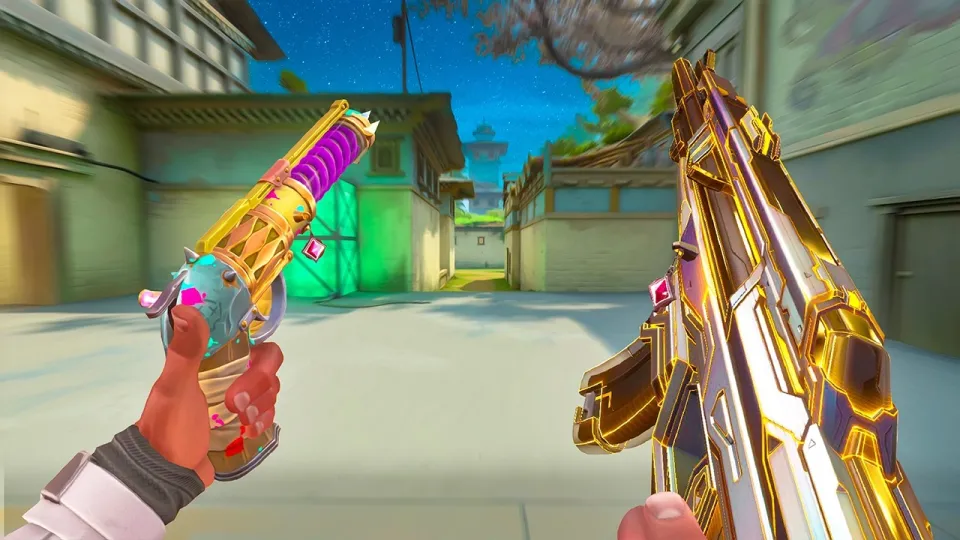
Video: low cortisol aim..
Want articles like this for your own video to promote it on YouTube and Google? Order them through the Telegram bot @sat_sit_bot. The bot writes and publishes the articles itself (with your YouTube video embedded) on popular topical websites (no ads). Your first 50 articles are free.
· based on the channel Rawzu
Key takeaways
- Low cortisol aim in Valorant is a calm, low-tension aiming style: smooth crosshair placement and minimal wasted motion instead of frantic flicking.
- Rawzu runs 400 DPI at 0.625 sensitivity, a 1440x1080 resolution and crosshair 1-6-2-2.
- Hardware in the setup: Logitech G Pro X Superlight 2 mouse, Artisan Zero Soft mousepad, Zowie XL2566K 360Hz monitor.
- Phoenix is the agent in focus: Blaze walls block vision and deal damage, Curveball blinds through corners, Hot Hands and Run It Back add durability.
- Viewers consistently single out Rawzu's movement as the standout, not just the aim itself.
Valorant low cortisol aim is a calm, low-tension approach to aiming where smooth crosshair placement, controlled micro-adjustments and clean movement replace frantic flicking and panic spraying. In practice it means keeping your hand relaxed, pre-aiming common angles and letting the enemy walk into your crosshair instead of chasing them. Rawzu's Phoenix-focused clip "low cortisol aim.." is a compact demonstration of that style, and you can pair it with a PC optimization pass via Hone if frame drops are part of what makes your aim feel jittery.
The phrase itself is a joke with a real point: high-stress aiming produces overshoots, tense grips and inconsistent sprays, while a deliberately calm routine produces repeatable results. Below is a breakdown of what the style looks like in Valorant, which settings Rawzu lists, how Phoenix's kit supports an aggressive but composed duelist, and the questions viewers keep raising about the clip.
What "low cortisol aim" actually means in Valorant
Low cortisol aim is the practice of aiming with as little physical and mental tension as possible, so that every movement of the mouse is intentional. The name is internet shorthand for the opposite of the adrenaline-heavy flick style many highlight clips celebrate.
Key characteristics of the approach:
- Crosshair placement does most of the work — the cursor sits at head level on the angle being held, so the shot requires a small adjustment rather than a large swipe.
- Sensitivity is low enough that small wrist movements map to small in-game turns, which reduces overshoot on long-range duels.
- Movement and aim are separated — strafe, stop, then shoot, instead of firing mid-swing.
- The grip stays loose; the arm carries the motion and the wrist only fine-tunes.
- Engagement decisions are conservative: take fights you have already set up rather than ones you have to rescue.
In Valorant specifically, this pairs well with the game's movement error and first-bullet accuracy rules: standing still for the first shot is mandatory, so a calm style that stops before firing is mechanically rewarded.
Rawzu's Valorant settings and gear
Rawzu's listed Valorant configuration is deliberately low-sensitivity and built around a fast monitor. The exact values from the video description:
| Setting | Value |
| --- | --- |
| Sensitivity | 400 DPI / 0.625 |
| Resolution | 1440x1080 |
| Crosshair | 1-6-2-2 |
| Mouse | Logitech G Pro X Superlight 2 |
| Mousepad | Artisan Zero Soft |
| Monitor | Zowie XL2566K 360Hz |
400 DPI at 0.625 is a low effective sensitivity — roughly 250 eDPI — which suits a style built on arm movement and precise micro-corrections rather than wrist flicks. The 1440x1080 resolution is a stretched 4:3-style aspect ratio that widens player models on screen, a common choice among players who prefer clearer targets over a wider field of view. The crosshair string 1-6-2-2 describes outline, dot and thickness settings rather than a color, so replicate it in-game through the crosshair profile menu.
The 360Hz monitor matters for this style too: at high refresh rates, small crosshair corrections are rendered with less blur, which makes it easier to trust a slow, deliberate adjustment instead of overcorrecting.
Why Phoenix fits a composed, aggressive playstyle
Phoenix is an offensive VALORANT duelist built around hunting enemies while crippling their ability to shoot back. His kit rewards players who commit to fights early but still want tools to reset a bad situation.
- Blaze creates a wall that blocks vision and damages anyone passing through it, letting Phoenix cross open, defended ground or split a site without exposing himself to every angle at once.
- Curveball is a flash that curves around geometry, so it can blind opponents holding tight corners where a straight-line flash would never reach.
- Hot Hands is a damaging molly that also heals Phoenix when he stands in it, which supports extended fights and post-plant holds.
- Run It Back is the ultimate that lets him die and respawn at the marker with full health, making aggressive first contact far less punishing.
That combination — self-healing, a vision-blocking wall, a corner-curving flash and a second life — is why Phoenix suits players who like to take space. A calm aim style complements it: the agent gives you the tools to survive a mistake, so you can afford to hold an angle properly instead of panic-flicking when someone appears.
Movement is the part viewers notice most
Across the comments on the clip, the recurring compliment is not the flicks but the movement — one viewer calls the aim impressive while calling the movement awesome, and others react to specific moments where Rawzu appears somewhere they did not expect. That matches how high-level Valorant actually works: aim duels are usually decided before the shot by how a player enters and exits an angle.
Practical habits that produce that impression:
- Clear angles with strafes rather than walking in a straight line, so your hitbox is never static in a duel.
- Use Phoenix's Blaze to cut sightlines, then swing the remaining angle instead of dry-peeking the whole site.
- Stop fully before firing — Valorant punishes moving shots with heavy spread on most weapons.
- Keep the crosshair at head height while rotating; the mouse does less work if the camera is already correct.
- Reset position after every kill; standing in the same spot after a trade invites the refrag.
This is also why the "low cortisol" framing is useful: movement planned in advance removes the panic that produces sloppy peeks.
Common questions and doubts about the clip
Viewers regularly raise the same handful of points about this style of gameplay, and most have straightforward answers. Several commenters joke that Rawzu seems to be playing a different game entirely — a reaction to unusual positioning and timings rather than anything supernatural. Others ask how an opponent ended up in a particular spot before them, which usually comes down to map control established earlier in the round, not luck. A few note the audio at high volume, which is a reminder that these clips are edited for effect. And there are repeated requests for another dedicated settings video, because the description lists values but not the reasoning behind them. The honest summary: the clips are selected highlights, the settings are real and copyable, and the movement is the transferable skill.
Useful links
- PC optimization for Valorant: https://hone.gg/a/rawzu
- Rawzu's original music on Spotify: https://open.spotify.com/artist/6DbATPR1PTNMx7U918bg1Q
- Rawzu's Discord community: https://discord.gg/axnFwyvxp3
- Second channel: https://www.youtube.com/@rawzuV2
The takeaway
Low cortisol aim in Valorant is less a secret technique than a discipline: low sensitivity, correct crosshair placement, clean stops before shooting and movement planned before the fight starts. Rawzu's Phoenix clip packages that into a short, satisfying watch, and the listed setup — 400 DPI at 0.625, 1440x1080, crosshair 1-6-2-2, a Superlight 2 on an Artisan Zero Soft and a 360Hz Zowie — gives you a concrete starting point to test. The channel Rawzu is worth following if you want more of this calm, movement-first duelist gameplay rather than flick montages. If stutter or low frames are undercutting your own consistency, start with a free optimization pass at hone.gg/a/rawzu before changing your sensitivity.
Questions & answers
What does "low cortisol aim" mean in Valorant?
It describes a calm, low-tension aiming style: relaxed grip, smooth crosshair placement and small deliberate corrections instead of fast flicks. The idea is that lower physical stress produces more repeatable aim, especially on first shots after stopping.
What sensitivity and settings does Rawzu use?
The listed setup is 400 DPI at 0.625 in-game sensitivity, a 1440x1080 resolution and crosshair 1-6-2-2. The peripherals are a Logitech G Pro X Superlight 2, an Artisan Zero Soft mousepad and a Zowie XL2566K 360Hz monitor.
Is Rawzu's aim actually better than his movement?
Viewers often praise the movement more than the aim itself, and that is a fair read. In Valorant most duels are decided by how you enter an angle and stop before shooting, so clean movement makes the aim look calmer and more consistent.
Should I copy a low sensitivity to aim like this?
A low sensitivity such as 400 DPI at 0.625 suits arm-based aiming and precise micro-adjustments, but it requires desk space and practice. Test it in Deathmatch for a few sessions before committing, and change one variable at a time rather than your sensitivity, crosshair and resolution all at once.
Source: low cortisol aim.. · Markdown version